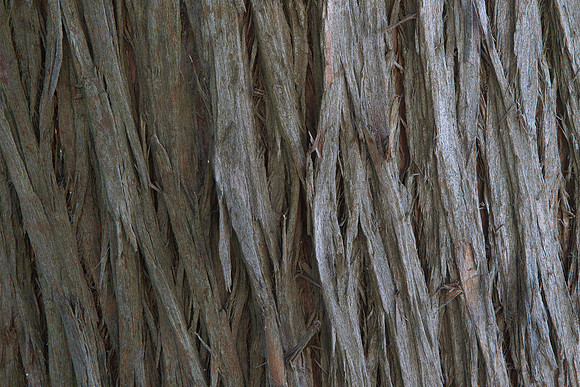
The thick, stringy amp; furrowed bark of the tōtara.br/br/Tōtara (Podocarpus totara) is a podocarp tree endemic to New Zealand. It grows throughout the North Island and northeastern South Island in lowland, montane and lower subalpine forest at elevations of up to 600 metres asl in areas where the soil is well drained. It is a medium to large tree, noted for its longevity and the great girth of its trunk growing up to 30-35 metres high and is often found regenerating on farmland as it's not eaten by livestock.br/br/The wood is hard, straight-grained and very resistant to rot, especially its heartwood. Due to its durability, tōtara wood was often used for fence posts, floor pilings and railway sleepers. It is also prized for its carving properties, and was the primary wood used in Māori carving such as to make waka (canoes) in traditional Maori boat building due to its relatively light weight (about 25% lighter than Kauri), long straight lengths and natural oils in the wood which help prevent rotting.