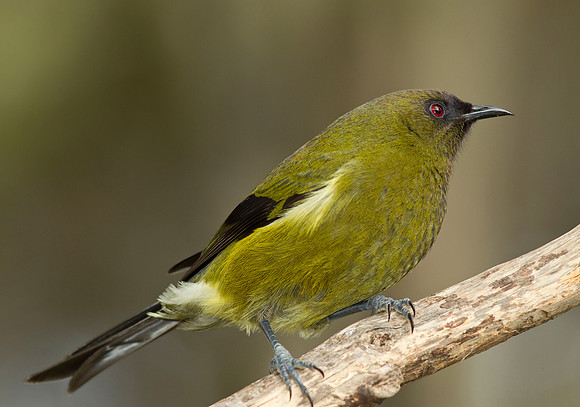
The New Zealand Bellbird (Anthornis melanura), also known by its Māori name Korimako, is a passerine bird endemic to New Zealand. The bellbird forms a significant component of the famed New Zealand dawn chorus of bird song that was much noted by early European settlers. The explorer Captain Cook wrote of its song "it seemed to be like small bells most exquisitely tuned". This is the best known of the New Zealand song birds being a member of the honeyeater family. The species is common across much of New Zealand and its offshore islands as well as the Auckland Islands. Alhough predominantly birds of native forest and scrub, bellbirds are also commonly found in parks and gardens where nectar-bearing plants are present.
The Orokonui Ecosanctuary has become the only place on mainland South Island of New Zealand where native birds, animals and insects can live a life safe from predators. An 8.7km pest-proof fence was completed in 2007 that encompasses 307 hectares of native and introduced forest. Animal pests have been almost entirely eradicated to allow reintroductions of endangered native species such as tuatara, kiwi and takahe. Futhermore it is becoming increasingly common for native birds to find their own way into the ecosanctuary and take up residence.