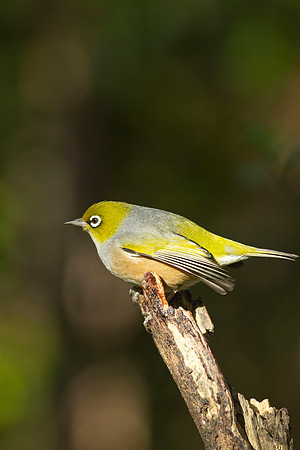
The Silvereye (Zosterops lateralis) is a recent colonist to New Zealand (1850s) and is today common throughout the country. They are constantly active and often form noisy flocks in winter and autumn. They are territorial particularly during the breeding season where they build a nest-cup woven together of fine grasses and fibres, mosses etc. They feed mainly on fruits and insects but eagerly take nectar and syrups at feeding stations when it is available.
The Orokonui Ecosanctuary has become the only place on mainland South Island of New Zealand where native birds, animals and insects can live a life safe from predators. An 8.7km pest-proof fence was completed in 2007 that encompasses 307 hectares of native and introduced forest. Animal pests have been almost entirely eradicated to allow reintroductions of endangered native species such as tuatara, kiwi and takahe. Futhermore it is becoming increasingly common for native birds to find their own way into the ecosanctuary and take up residence.