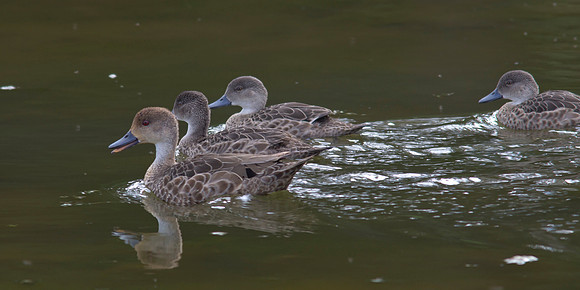
Grey Teal 1
The Grey Teal (Anas gracilis) is a small dabbling duck that frequents shallow freshwater lakes. The grey teal is one of the most numerous ducks in Australia, and this species has more recently self-introduced to New Zealand with the last major irruption in 1957 following drought conditions in Australia. They breed in Australia, New Guinea, Indonesia, Vanuatu, Solomon Islands and are widespread in New Zealand.
The grey teal is small, slim, ‘plain-faced’ duck, considerably smaller than a mallard or grey duck. It is mostly grey-brown in colour with pale cheeks, chin and throat. The eye is bright crimson, especially in adult males, and the bill is dark grey. Immature birds have a duller red eye. The preferred habitat is shallow freshwater lakes, lagoons and swamps with extensive marginal cover, but at times birds are seen on salt and brackish water.
In New Zealand at least 6% of the population is shot during the five week hunting season, which is high considering that hunting of this species is prohibited. Introduced mammalian predators, especially ferrets and stoats which are common in wetland locations, are a major threat to adults and their broods. Swamp harriers, eels and rats are also known to take ducklings when on the water.