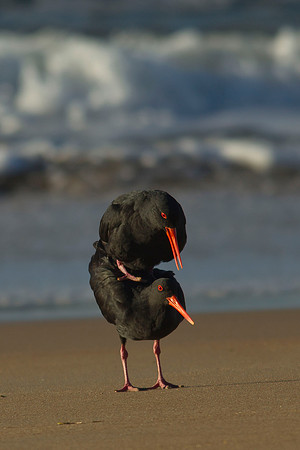
Variable Oystercatcher mating ritual 3
The Variable Oystercatcher (Haematopus unicolor), also known as Torea-pango (Maori), is an endemic species of wader found throughout New Zealand. It typically inhabits the sandy or rocky coastlines feeding mostly on molluscs, worms, crabs and small sea insects. "Variable" refers to the frontal plumage, which ranges from pied through mottled to all black. They are polymorphic meaning they have different genetic variants, with blacker birds more common in the south. They have pink legs, an orange eye ring and red beaks. They are often seen in pairs on the coast all around New Zealand. During breeding, the pair will defend their territory, sometimes aggressively.
They are often seen in pairs probing busily for shellfish along beaches or in estuaries. Previously shot for food, variable oystercatchers probably reached low numbers before being protected in 1922, since when numbers have increased rapidly. They are long-lived, with some birds reaching 30+ years of age.
Breeding success of variable oystercatchers is often low, with main causes of failure being predation of eggs or chicks by a range of mammalian and avian predators, flooding of nests by big tides, and disturbance resulting from human recreational use of the coast.